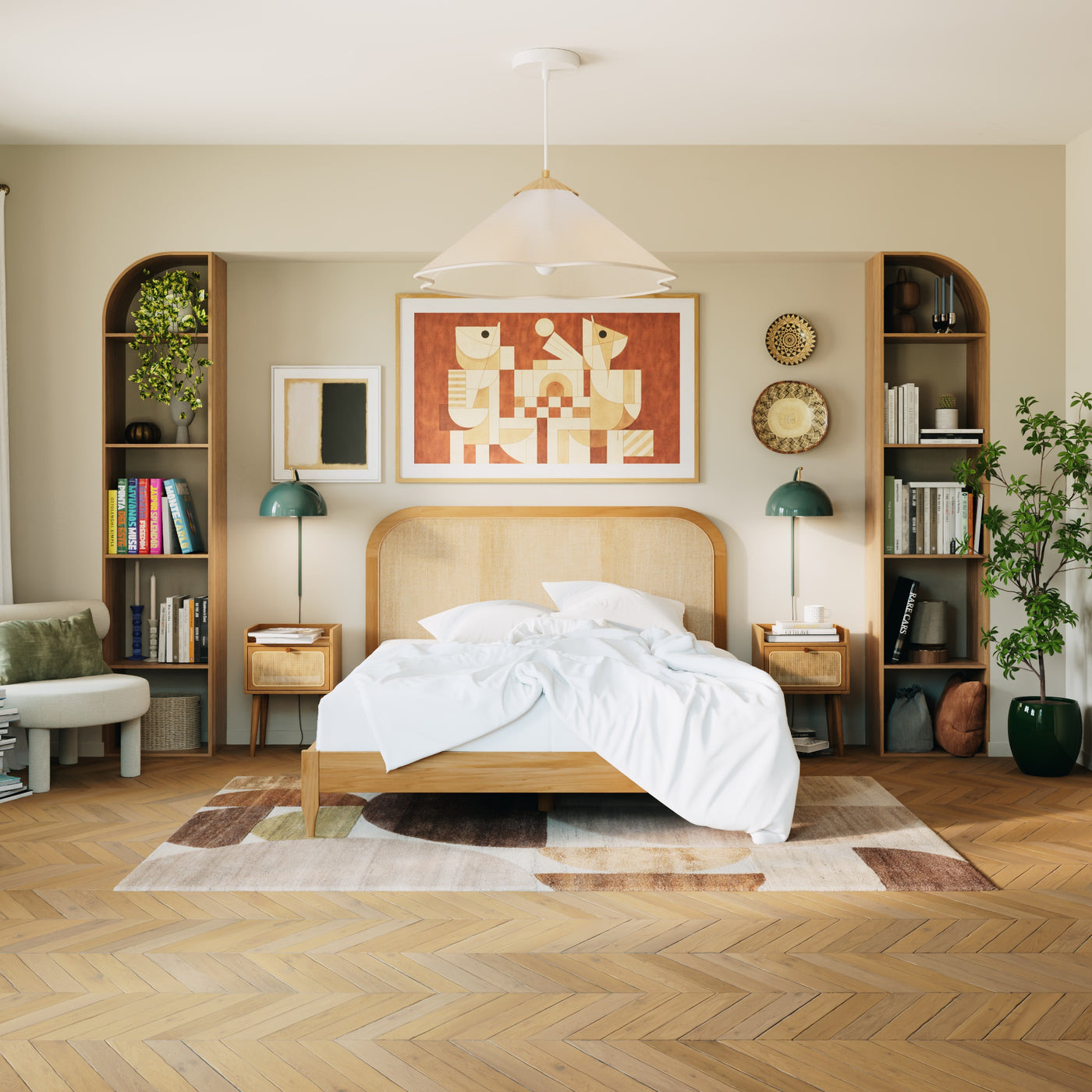
Interior design has spent the last decade selling a house you are not allowed to sit down in. Everything is styled, everything is staged, and somewhere along the way the sofa became a photograph rather than a piece of furniture. The people who actually live in these rooms — with the crumbs, the laundry pile, the phone charger under the cushion — rarely get a brand that talks to them.
Slome is aimed squarely at that gap. It is a French sleep and living brand, rebranded from Hypnia, and its whole pitch is written on the homepage in a way few furniture companies would dare: on ne vend pas de perfection — we do not sell perfection. The tagline is "Designed to chill." The mattress quiz is called "Which mattress is made for your laziness?" The bedside table, the copy says, understands the snooze button.
That is a charming brand position. The question is whether the products behind it hold up. Slome sells mattresses, bed bases, beds, sofas, headboards, bedside tables, pillows, duvets and bed linen — essentially a whole bedroom, plus the sofa in the next room — and the price architecture runs from about €30 for a fitted sheet to €1,100 for a convertible sofa. What follows is an honest look at what is actually on the site, what is genuinely good value, and where you should read the small print before you click.
What Slome actually is
Slome is a direct-to-consumer French brand with a warehouse operation and a customer service line you can call (+33 5 82 95 66 03), plus chat and email. It ships to France, Belgium, Luxembourg, Germany, Monaco and Switzerland. It runs a loyalty scheme called the Club, a professional arm for hospitality, and an outlet section.
The brand story is built on three stated principles, and they are more coherent than most. Authenticity — your interiors do not have to be Instagrammable to be good. Zero pressure — every posture is welcome, every snooze is legitimate. Liberating — the promise is a space where you can let go exactly as you are. It is marketing, obviously, but it is marketing that shapes the product line in visible ways: the emphasis on storage beds and drawer bases, the fabric covers designed for real life, the fact that the cheapest mattresses are not hidden away as an embarrassment.
There is also a level of transparency worth noting. The site tells you what it does not promise — not the perfect home, not the sofa that will change your life, not the bedside table that will make you productive — and then tells you what it does. For a category that usually sells aspiration in capital letters, that is refreshing.
The mattress range, decoded
The mattress collection is the centre of the business, and it is organised the way a good shop should be: by construction, not by invented brand names. There are 18 listings on the mattress page once you include the reconditioned versions, and they cluster into five families.
Pocket-spring and hybrid. The flagship is the Bien-être Suprême at €439.99, a 30 cm pocket-spring mattress badged "Élu produit de l'année 2024" and the top seller on the site. Below it sit the Hybride Original at €349.99 and the Hybride Essentiel at €239.99, both hybrid builds combining a pocket-spring core with foam comfort layers. The Hybride Ultime at €381.49 is the most aggressively discounted of the group, marked down from €544.99. A hybrid is the safe default for most couples: the springs give support and airflow, the foam gives the soft landing, and the two sleepers do not drag each other around when one of them turns over at 3am.
Foam. The Essentiel at €189.99 is the entry point — a straightforward PU and memory-foam mattress for a spare room, a first flat or a child who will outgrow the decision in four years. The Confort Premium at €369.99 uses open-cell cooling foam and is made in France. The Octaspring at €329.99 uses foam spring columns rather than metal springs, with recycled content in the build, also made in France — a genuinely different feel, more responsive and less bouncy than a traditional spring core.
Latex. The Latex Hybride at €529.99 puts a latex comfort layer over a spring core with seven pressure-relief zones, and the Latex Premium at €739.99 is a full latex core. Latex is the choice for people who sleep hot or who want a mattress that pushes back a little rather than swallowing them. Both are made in Belgium.
Reconditioned. Six of the 18 listings are refurbished versions of the models above, at 30 to 40 per cent off — the cheapest, a reconditioned Essentiel, is €146.99. This is the most interesting part of the catalogue and it gets its own section below.
Toppers. If the mattress is fine but the surface is not, the Surmatelas Bambou, Premium, Essentiel and Hybride Ferme run from the cheap fix to a proper firmness adjustment. A 5 cm bamboo topper is a far cheaper way to test whether you actually want a softer bed than to buy one.
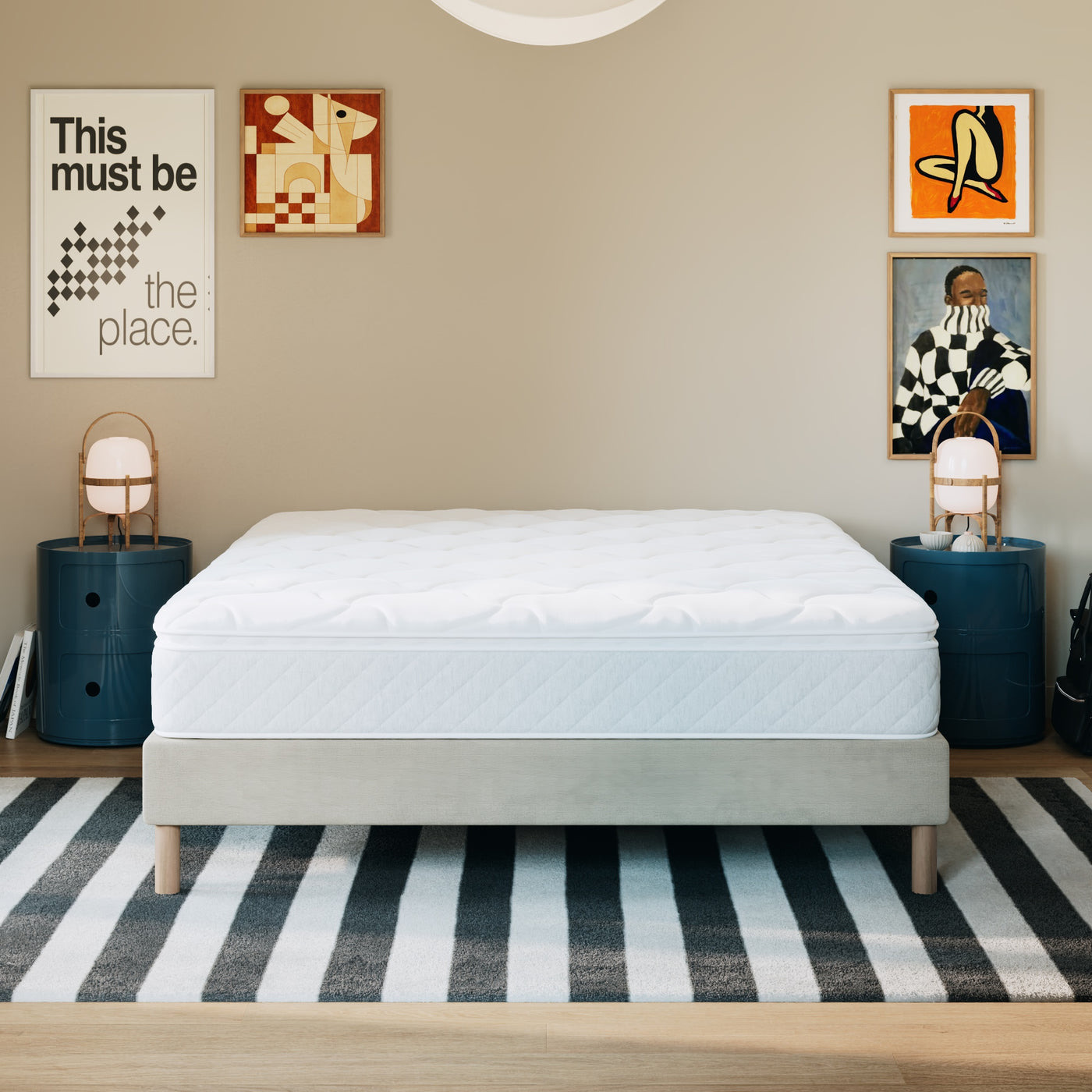
Across the range, the practical filters are unusually legible. Thicknesses run 16, 20, 25 and 30 cm. Firmness is given on a 5-to-7-out-of-10 index rather than in adjectives. Sizes cover 80×200, 90×190, 90×200, 140×190, 140×200, 160×200, 180×200 and 200×200 — so a single, a small double, a standard double, a king and a genuine 200×200 all exist without a special order. Every mattress is listed as hypoallergenic, and the covers are removable on 17 of the 18.
The reconditioned line is the quiet highlight
Most brands treat refurbished stock as a clearance bin at the back of the site. Slome gives it a category of its own, and the economics are hard to argue with: a reconditioned Bien-être Suprême is €342.99 against €439.99 new, and a reconditioned Hybride Ultime is €326.99 against a list price of €544.99.
The logic is straightforward. A mattress returned during a trial is not a worn mattress — it is a mattress someone lay on for a few weeks. If it has been cleaned, inspected and re-covered, the person who buys it gets the same construction for a third less. The trade-off is that you cannot choose the exact age or history of the specific unit, and — this is the part to read carefully — the long trial period does not apply to reconditioned mattresses or to the bundled packs. You are buying a cheaper mattress on standard consumer rights, not a cheaper mattress with a three-month escape hatch.
If you are furnishing a guest room, a rental flat or a teenager's bedroom, that is a very sensible trade. If it is the bed you will sleep in for the next decade, pay the extra for the new one and keep the trial.
Beds, bases, and the storage question
The furniture side of Slome is where the "small home" argument gets practical. The Lit Leni starts at €259.99 and comes with or without drawers — a slatted wooden frame in pine and other finishes that looks considerably more expensive than it is. The Lit Bali, in rattan and wood, is the model that best matches the brand's warm, unpolished aesthetic.
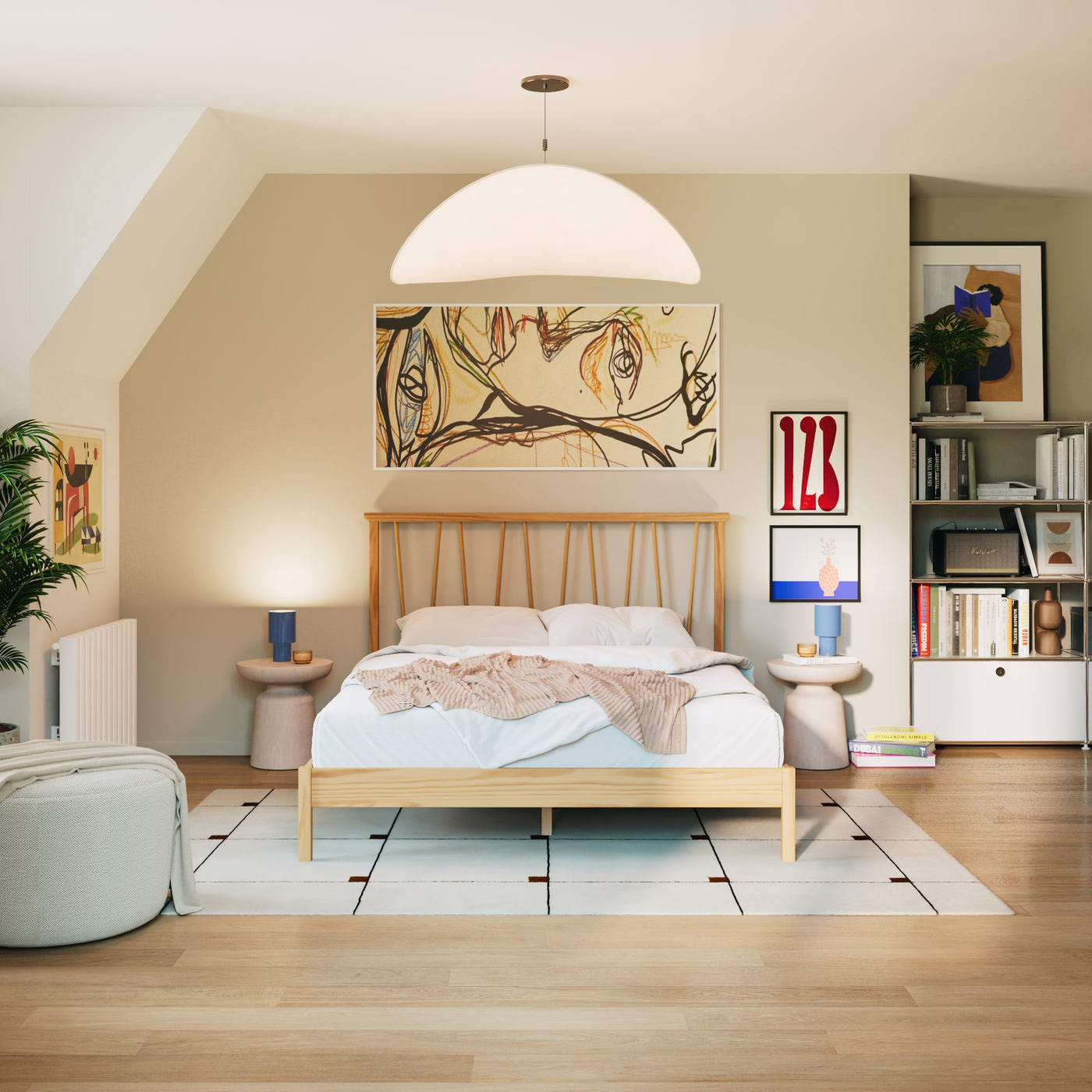
Underneath everything, the base matters more than most people realise: a pocket-spring mattress on a slatted base with gaps that are too wide will lose support long before its time. Slome sells upholstered and wooden bases, storage bases and the Sommier coffre Nova at €424.99 — a bed base with a full-size lift-up storage compartment, which in a flat with no cupboard space is not a luxury but a solution to an actual problem.
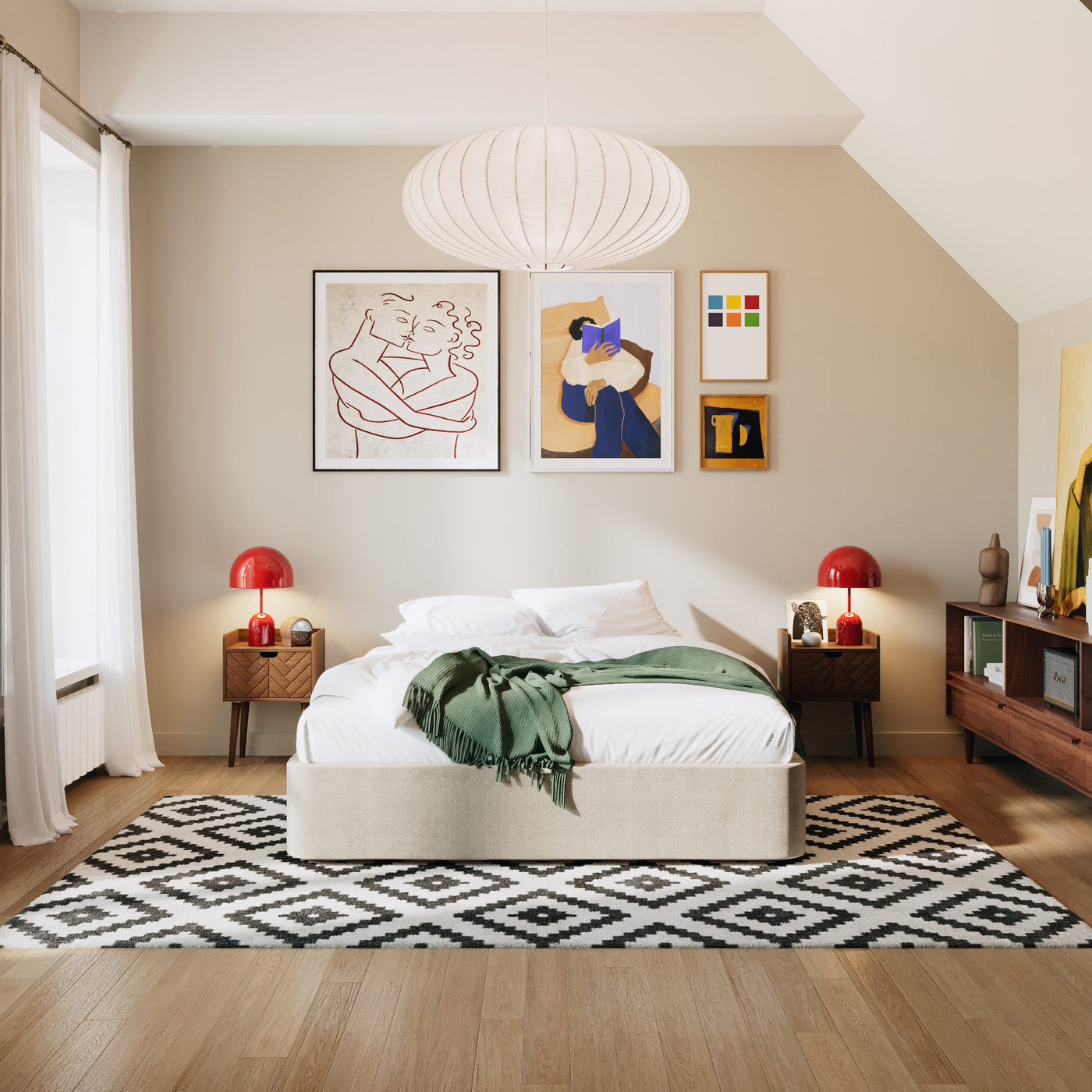
There are also headboards in fabric and wood, and the Table de chevet bois Nova at €89.99 in oak and rattan, with a 5 per cent discount if you buy two. Small thing, but it is the kind of detail that tells you the brand has thought about people buying a room rather than a single item.
The sofa: Milo, and the case for a bed in the living room
The Canapé lit convertible Milo starts at €1,099.99 and is the most expensive thing on the site. It is a proper convertible sofa rather than a sofa with a mattress stuffed inside it: a deep seat, wide arms, fabric in olive, beige, brown, white and grey, and a fold-out sleeping surface. Slome also sells replacement covers for it, which is the practical answer to the question every sofa owner eventually asks — what happens when the cushion cover is destroyed by a child, a dog or a red wine.
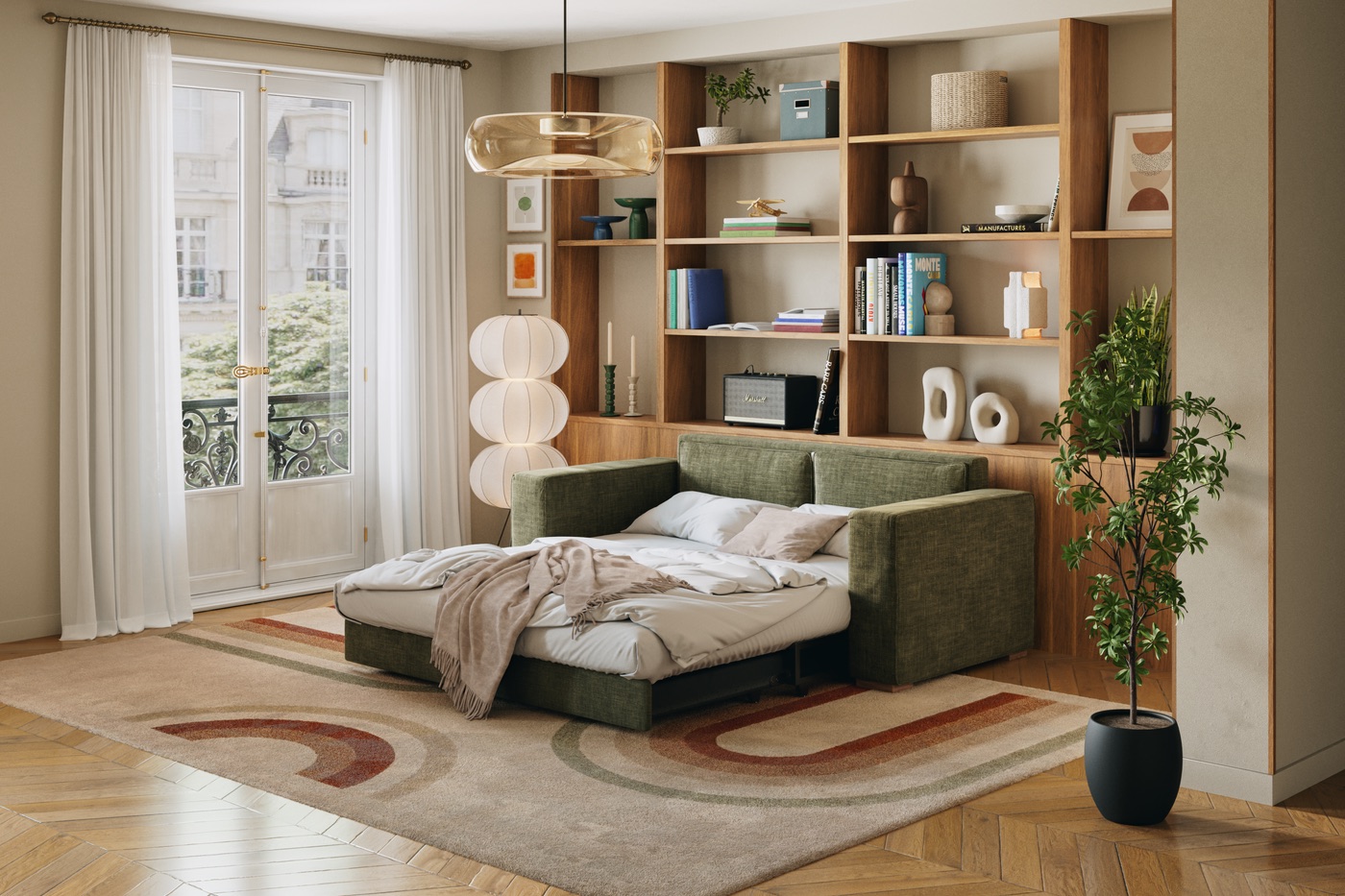
The honest note here is delivery. Free standard delivery applies across the site except sofas, which are the one category where you will pay. Check the delivery page before you fall in love with the green one.
Bedding, pillows and the small purchases that matter
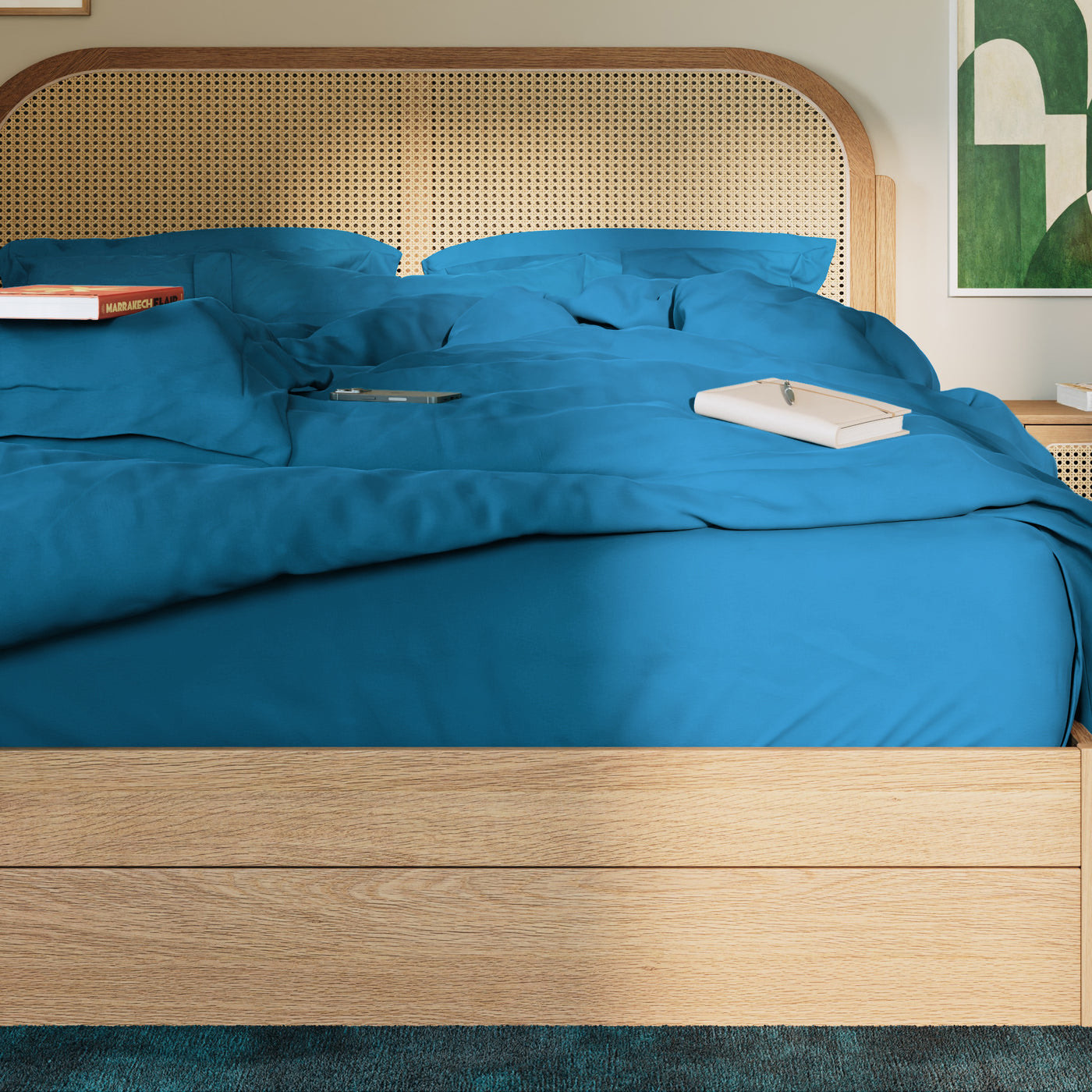
The linen range is broader than you would expect from a mattress company, and the prices are competitive. A drap housse in percale starts at €29.99, made in Portugal. A parure de lit in cotton gauze — the crinkled, breathable, slightly rumpled fabric that has taken over European bedding — is €129.57 for a full set. There is percale, cotton gauze, cotton flannel, jersey, washed linen and cotton satin across fitted sheets, duvet covers, flat sheets and pillowcases, in a colour range that runs from anthracite and taupe to mustard, terracotta and peacock blue.
Two small items deserve a mention because they solve problems rather than decorate. The Oreiller Ergonomique à mémoire de forme at €59.99 is a three-in-one shaped memory-foam pillow aimed at neck pain. And the Protège Matelas intégral anti punaises de lit at €41.99 is a full-encasement, waterproof, breathable and silent mattress protector — the €42 you spend to make a bedbug problem survivable, and the €42 that makes a mattress last.
There is also a full baby and child section: cabin beds, evolving beds, bunk beds, cots, baby mattresses, nursery furniture and the smaller bedding sizes. It is not an afterthought bolted onto the adult range; it has its own navigation.
The commercial terms, which matter more than the spec sheet
This is the part of the page that decides whether you should buy online at all, so here it is plainly.
- Up to 120 nights' trial on mattresses, with delivery and return included — though reconditioned mattresses and bundles are excluded.
- 10-year warranty across the mattress range.
- Free standard delivery in France and the neighbouring markets, sofas excluded.
- Returns handled through customer service rather than a self-service portal.
- Payment by card, PayPal and Alma, so instalments are available on larger orders.
- Delivery countries: France, Belgium, Luxembourg, Germany, Monaco and Switzerland. If you are outside those, check before ordering — a mattress is an awkward thing to send across a border.
- Customer service in French, by phone, chat and email, with a real number and a stated address.
The 120-night trial is the single most important line. A mattress takes two to three weeks before your body stops comparing it to the old one; three to four months is enough time to actually know. The fact that collection and return are included is what converts the trial from a slogan into a real option.
The honest caveats
A few things the marketing does not put on the product card, and you should know before you order.
The discounts are permanent. Almost every product shows a struck-through "original price" and a 9 to 15 per cent reduction, and the site currently runs a "Slow Friday" banner advertising up to 40 per cent off plus a further 10 per cent with a code. This is standard direct-to-consumer retail, and it means the strikethrough is a design element rather than a genuine event. Judge the actual number, not the badge.
The reviews are on-site. Slome links out to Trustpilot, but the review blocks you see on product pages are the brand's own. They are useful for reading about specifics — firmness, delivery, how the latex actually feels — but they are curated, not independent testing.
The reconditioned line, as said, carries no trial. The prices are excellent; the safety net is thinner.
And the practical one: the entire shop is in French. Product pages, sizing, checkout, customer service — all French. If you are reading this in English and planning to order, you will be translating as you go, and if something goes wrong, the conversation will happen in French. Google Translate will get you through the browsing; it will not help you argue about a delivery slot.
Finally, there is no long-term durability data that I could find for these mattresses, and "Élu produit de l'année" is a consumer-products award rather than a sleep study. The construction descriptions are specific enough to be meaningful — spring type, thickness, firmness index — but the claims about them are the brand's own.
Who it suits
The Bien-être Suprême for a couple who want one mattress to last and would rather not pay four figures for it. The Hybride Original or Hybride Essentiel for a spare room or a first flat where the budget is the real constraint. The Latex Premium for hot sleepers and anyone who finds memory foam too enveloping. The reconditioned line for guest rooms, rentals and student flats, where a €147 mattress is a much better decision than a €100 one. The Lit Leni and Sommier coffre Nova for small bedrooms where storage is the actual problem. The Milo for a one-bedroom flat that needs to seat six people and sleep two.
The verdict
What makes Slome worth an afternoon of reading is that the proposition is legible. Thickness is given in centimetres, firmness on a numbered scale, spring construction in plain language, and the prices sit where the product actually is — €240 to €740 for mattresses, not the four figures a European showroom would charge for the same build. The permanent discounts are theatre and the shop is French-only, but the 120-night trial, the 10-year warranty and the reconditioned line up to 40 per cent cheaper are real, and they change the risk of buying a bed you have never lain on.
For a house where the bedroom is the room you actually live in — rather than the one you photograph — that is a better deal than the one you will get by spending an afternoon on a showroom floor. The full range, including the beds, bases, sofas and linen, is here: 👉 Explore Slome mattresses, beds and bedroom furniture